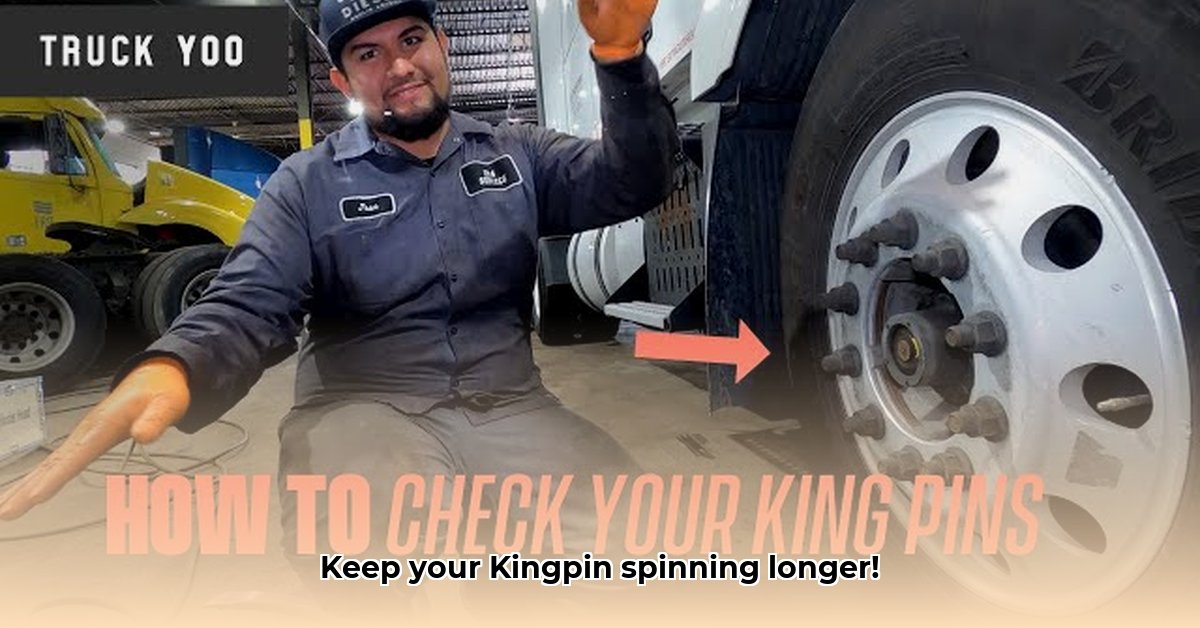
Kingpin Maintenance: Keeping Your Rig Rolling
The kingpin, a seemingly small component, is critical for the safe and efficient operation of your tractor-trailer. Neglecting its maintenance can lead to costly repairs, downtime, and serious safety hazards. This guide provides step-by-step instructions and best practices for maximizing kingpin lifespan. Understanding the kingpin's crucial role and implementing a proactive maintenance plan is essential for every fleet manager and mechanic. For more in-depth resources, check out this helpful guide on tractor maintenance: tractor maintenance guide.
Visual Inspection: Your First Line of Defense
Before any complex maintenance, a thorough visual inspection is paramount. This simple check can identify potential problems early, preventing costly repairs and downtime. Arm yourself with a flashlight and carefully examine the kingpin for the following:
- Wear and Tear: Inspect the kingpin's throat (where it fits into the trailer) and shoulder (where it meets the tractor) for excessive wear, pitting (small indentations), or rust. Even slight damage can compromise structural integrity.
- Damage: Look for cracks, bends, or other forms of damage. A seemingly small crack can quickly escalate into a major failure.
- Leaks: Check for grease leaks, indicating potential seal failure and compromised lubrication. Addressing this promptly prevents accelerated wear.
- Play: Gently wiggle the kingpin (with the trailer properly secured). Noticeable movement suggests excessive wear and a need for replacement or repair.
This quick visual assessment is a cost-effective preventative measure. Early identification of issues significantly reduces the risk of catastrophic failure. Do you regularly perform these checks? Making visual inspection a habit saves significant time and resources later.
Deeper Inspection Techniques
Visual inspection provides a preliminary assessment, but a more thorough inspection is necessary for comprehensive evaluation and preventative maintenance. For a more in-depth evaluation, use the following steps:
- Precise Measurements: Utilize a caliper to precisely measure kingpin dimensions against manufacturer specifications. Even minor discrepancies can impact performance and lifespan.
- Lubrication Check: Proper lubrication is vital. Verify the lubrication points and add fresh, manufacturer-recommended grease if necessary. Using the wrong type of grease can cause significant damage.
- Load Testing: This crucial step, best performed by professionals, involves using specialized equipment to evaluate the kingpin's ability to withstand normal operating loads. Load testing ensures the kingpin's structural integrity.
Kingpin Replacement: A Step-by-Step Guide (for Professionals)
Replacing a kingpin is a complex procedure requiring specialized tools and extensive mechanical expertise. Due to the inherent safety risks and potential for costly errors, it's strongly recommended to leave this task to qualified professionals. However, a general outline for professional mechanics is provided below:
- Disconnection: Safely detach the trailer from the tractor, ensuring proper support to prevent accidents.
- Removal: Carefully remove the old kingpin using the appropriate tools and techniques. This step requires specialized knowledge and equipment.
- Installation: Install the new kingpin precisely, ensuring perfect alignment and seating. Improper installation can lead to rapid wear and tear.
- Reassembly: Thoroughly reassemble all components, checking for leaks and ensuring proper connections.
- Testing: Perform a comprehensive inspection and load test to validate the kingpin's proper function and stability.
Remember, safety is paramount during kingpin replacement. Following manufacturer guidelines and employing proper safety procedures is non-negotiable.
Factors Affecting Kingpin Lifespan
Several factors influence kingpin longevity. Understanding these factors enables informed decisions regarding maintenance and part selection. These factors can significantly impact your bottom line and vehicle safety:
- Material Quality: High-quality, properly treated steel is crucial. Inferior materials result in premature wear.
- Operating Conditions: Harsh weather, rough roads, and heavy loads significantly accelerate wear and tear.
- Maintenance: Regular inspections and proper lubrication are key to extending kingpin life.
Choosing quality kingpins from reputable manufacturers, despite higher upfront costs, provides long-term cost savings by reducing downtime and replacement frequency.
Preventative Maintenance: Your Best Strategy
Consistent preventative maintenance is essential for preventing costly kingpin failures. Regular inspections, proper lubrication, and adherence to manufacturer guidelines are paramount. Regularly assessing the kingpin for wear and tear extends its service life and ultimately improves safety and reduces overall maintenance costs. A proactive approach is far more cost-effective than reactive repairs. Did you know that proactive maintenance can reduce downtime by up to 90%?
Key Takeaways:
- Regular lubrication reduces friction, significantly extending kingpin life.
- Visual inspections proactively identify early damage.
- Precise measurements of kingpin play determine when replacement is crucial.
- Adhering to manufacturer recommendations and industry best practices safeguards safety and compliance.
- A comprehensive preventative maintenance program minimizes costly repairs and lost productivity.
This guide provides a framework for maximizing kingpin lifespan and ensuring safe and efficient operation. Remember, prioritizing regular maintenance ultimately translates to significant cost savings and reduced safety risks.